GENERAL SEMINAR: Prof. Sixto Malato Rodriquez, Plataforma Solar de Almería-CIEMAT, Spain
ABOUT Prof. Sixto Malato Rodriquez
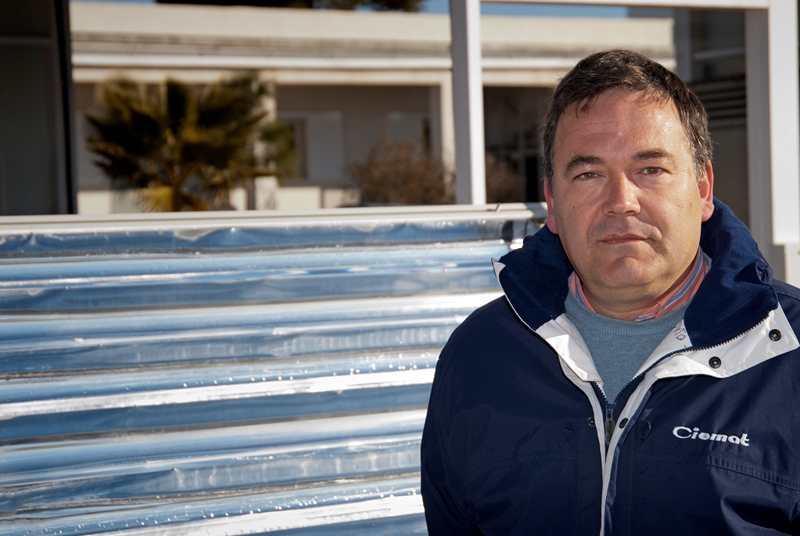
Sixto Malato is full Professor of Research of the Spain Ministery of Science and Universities, working at Plataforma Solar de Almeria (www.psa.es). Prof. Malato is at the forefront of advanced wastewater treatment, especially in the development of photoreactors. Some of his milestones are: i) fundamentals for solar photoreactors; ii) methodology for combination of AOPs with aerobic treatments; iii) combination of membrane processes with AOPs, iv) treatment methods for the removal of contaminants of emerging concern from wastewater; and more recently v) production of hydrogen using solar photoreactors.
He has carried out top-level research, basic for the EU regulation on water reuse (UE 2020/741, applied since 26 June 2023) and the recent Directive (EU) 2024/3019 of 27 Nov. 2024, concerning urban wastewater treatment. More recently, his contributions are significant in photoreforming of organic matter for photofuel production.
He is between the most cited authors in Spain, with an H factor of 93 (http://www.scopus.com) and a continuous rise in citations >32,000 citations in June 2025). He has co-authored >320 publications (>200 in Q1) in indexed journals (JCR), and more than 400 contributions to Int. conferences. Director or Co-Director of CIESOL, http://www.ciesol.es, Joint Research Center (Univ. Almería-CIEMAT), since 2006. Director of Plataforma Solar de Almeria 2012-2017. Prof. Malato has been “chairman” of the most important events in the area: “3rd European conference on environmental applications of advanced oxidation processes” (EAAOP3) and “10th European Meeting on Solar Chemistry and Photocatalysis: Environmental Applications (SPEA10).
Broad participation in EU projects (>30 projects for >15 M€, many of them as leader). has supervised 22 PhDs (3 more under preparation). Editor of 40 special issues in different high IF journals: Appl. Catal. B: Environ., Chem. Eng. J., J. Hazar. Mat., Cat. Today and others.
The Jury’s Grand Prix of “European Grand Prix for Innovation Awards”. 11 December 2004, Mónaco. http://www.european-grandprix.com/index_en.htm. Jaime I Price (Most important in science in Spain) in Environmental Protection, 2011.
A critical look at the development of advanced oxidation processes based on basic and applied research and innovation.
S. Malato
Plataforma Solar de Almería – CIEMAT, 04200 Tabernas, Almería, Spain
Sixto.malato@psa.es
The TRL is a metric to measure the maturity of a technology with the aim of de-risking a development activity. The concept of TRL dates back to the 60s, yet the full formulation was done only in 1989 by NASA, and consisted of 7 levels. Today’s TRL scale consists of 9 levels: minimum at Level 1 and maximum at level 9. Based on ISO 16290 [2013] Standard, it is applicable primarily to space system hardware, although the definitions could be used in a wider domain in many cases. Therefore, it helps to understand the connections between basic, applied and innovative science in polluted water treatment by advanced oxidation processes in general, and solar photocatalysis in particular.
The use of TRLs is an important help to define the degree of technological maturity to which we are referring to when we want to finance a certain thematic line in photocatalysis. Support a project that would address the 9 TRLs would mean encouraging the development of a new technology from its basic idea (first seminal publication) to its deployment in the market (actual photoreactors proven through successful operations in operating environment). If the focus is to be placed on the basic research, the call for aid is should refer fundamentally to the first three levels (TRL 1 – TRL 3). If they are intended addressing technological development projects, you will need to insist more on the following four (TRL 4 – TRL 7). Finally, the closest innovation projects to the market and the implementation and deployment projects would be contemplated in the last two (TRL 8 – TRL 9). Mitigating risks and maximizing sustainability of treated wastewater reuse, using advanced oxidation processes, needs a TRL comprehensive approach.